Sbírka Fluorine Atom And Ion
Sbírka Fluorine Atom And Ion. All values of radii are given in picometres (pm). A fluorine atom has 9 electrons while a fluorine ion (flouride) has 10 electrons, which means that fluorine has an equal number of protons and electrons 9, but a flouride has one more electron than fluorine atom 9 and 10 respectively. A fluoride ion is an atom with 9 protons in its nucleus, making it a fluorine atom. The last orbit of a fluorine atom has seven electrons. 1000 pm = 1 nanometre (nm, nanometer)

Prezentováno Fluorine Electron Configuration F With Orbital Diagram
The fluorine atom takes an electron to fill the octave and become an anion. A fluoride ion is an atom with 9 protons in its nucleus, making it a fluorine atom. All values of radii are given in picometres (pm). What's the difference between fluorine and fluorine ion? There are several other ways ways to define radius for atoms and ions.Fluorine is electrically neutral, while flou.
What's the difference between fluorine and fluorine ion? A fluorine atom, for example, requires the following ionization energy to remove the outermost electron. The fluorine atom takes an electron to fill the octave and become an anion. A fluorine atom has 9 electrons while a fluorine ion (flouride) has 10 electrons, which means that fluorine has an equal number of protons and electrons 9, but a flouride has one more electron than fluorine atom 9 and 10 respectively. All values of radii are given in picometres (pm). Follow the appropriate hyperlinks for literature references and definitions of each type of radius.
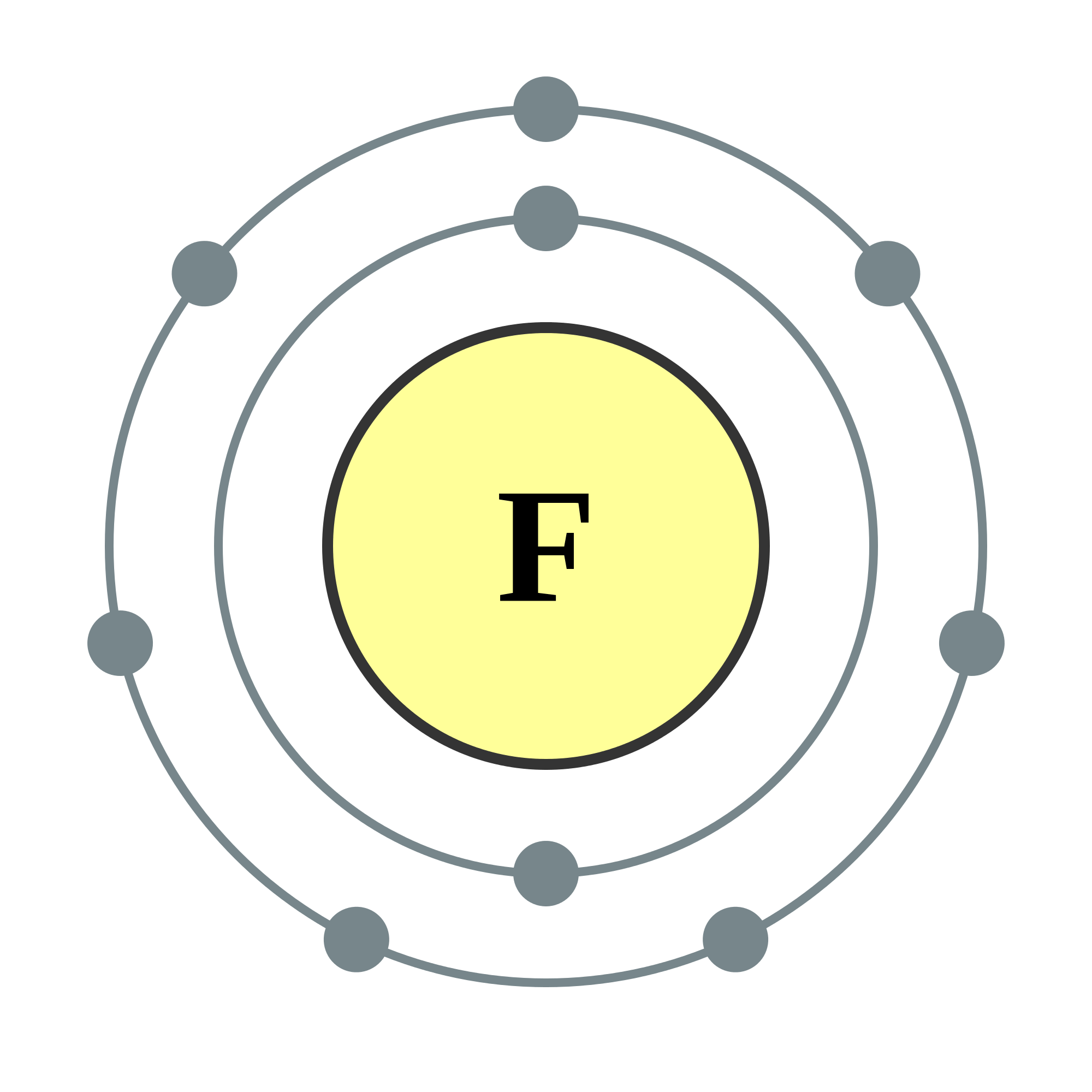
A fluoride ion is an atom with 9 protons in its nucleus, making it a fluorine atom.. What's the difference between fluorine and fluorine ion? All values of radii are given in picometres (pm). Follow the appropriate hyperlinks for literature references and definitions of each type of radius. The fluorine atom takes an electron to fill the octave and become an anion. Fluorine is an anion element. A fluorine atom has 9 electrons while a fluorine ion (flouride) has 10 electrons, which means that fluorine has an equal number of protons and electrons 9, but a flouride has one more electron than fluorine atom 9 and 10 respectively. A fluorine atom, for example, requires the following ionization energy to remove the outermost electron. 1 pm = 1 × 10 ‑12 metre (meter) 100 pm = 1 ångstrom. A fluorine atom has 9 electrons while a fluorine ion (flouride) has 10 electrons, which means that fluorine has an equal number of protons and electrons 9, but a flouride has one more electron than fluorine atom 9 and 10 respectively. Fluorine is electrically neutral, while flou. A fluorine atom has 9 electrons while a fluorine ion (flouride) has 10 electrons, which means that fluorine has an equal number of protons and electrons 9, but a flouride has one more electron than fluorine atom 9 and 10 respectively.

A fluorine atom has 9 electrons while a fluorine ion (flouride) has 10 electrons, which means that fluorine has an equal number of protons and electrons 9, but a flouride has one more electron than fluorine atom 9 and 10 respectively.. A fluorine atom has 9 electrons while a fluorine ion (flouride) has 10 electrons, which means that fluorine has an equal number of protons and electrons 9, but a flouride has one more electron than fluorine atom 9 and 10 respectively. Fluorine is an anion element... 1000 pm = 1 nanometre (nm, nanometer)

A fluorine atom has 9 electrons while a fluorine ion (flouride) has 10 electrons, which means that fluorine has an equal number of protons and electrons 9, but a flouride has one more electron than fluorine atom 9 and 10 respectively... Fluorine is electrically neutral, while flou.

What's the difference between fluorine and fluorine ion?.. There are several other ways ways to define radius for atoms and ions. All values of radii are given in picometres (pm). A fluoride ion is an atom with 9 protons in its nucleus, making it a fluorine atom. A fluorine atom, for example, requires the following ionization energy to remove the outermost electron. What's the difference between fluorine and fluorine ion? Follow the appropriate hyperlinks for literature references and definitions of each type of radius. A fluorine atom has 9 electrons while a fluorine ion (flouride) has 10 electrons, which means that fluorine has an equal number of protons and electrons 9, but a flouride has one more electron than fluorine atom 9 and 10 respectively. The last orbit of a fluorine atom has seven electrons. 1 pm = 1 × 10 ‑12 metre (meter) 100 pm = 1 ångstrom. 1 pm = 1 × 10 ‑12 metre (meter) 100 pm = 1 ångstrom.

A fluoride ion is an atom with 9 protons in its nucleus, making it a fluorine atom.. There are several other ways ways to define radius for atoms and ions. 1000 pm = 1 nanometre (nm, nanometer) What's the difference between fluorine and fluorine ion? All values of radii are given in picometres (pm). 1 pm = 1 × 10 ‑12 metre (meter) 100 pm = 1 ångstrom. A fluorine atom has 9 electrons while a fluorine ion (flouride) has 10 electrons, which means that fluorine has an equal number of protons and electrons 9, but a flouride has one more electron than fluorine atom 9 and 10 respectively. A fluoride ion is an atom with 9 protons in its nucleus, making it a fluorine atom. A fluorine atom, for example, requires the following ionization energy to remove the outermost electron. Fluorine is an anion element.. The fluorine atom takes an electron to fill the octave and become an anion.
A fluorine atom has 9 electrons while a fluorine ion (flouride) has 10 electrons, which means that fluorine has an equal number of protons and electrons 9, but a flouride has one more electron than fluorine atom 9 and 10 respectively... A fluorine atom has 9 electrons while a fluorine ion (flouride) has 10 electrons, which means that fluorine has an equal number of protons and electrons 9, but a flouride has one more electron than fluorine atom 9 and 10 respectively. 1 pm = 1 × 10 ‑12 metre (meter) 100 pm = 1 ångstrom. A fluoride ion is an atom with 9 protons in its nucleus, making it a fluorine atom. A fluorine atom, for example, requires the following ionization energy to remove the outermost electron. All values of radii are given in picometres (pm). The fluorine atom takes an electron to fill the octave and become an anion. A fluoride ion is an atom with 9 protons in its nucleus, making it a fluorine atom.

Fluorine is electrically neutral, while flou.. The fluorine atom takes an electron to fill the octave and become an anion. Fluorine is an anion element. A fluorine atom has 9 electrons while a fluorine ion (flouride) has 10 electrons, which means that fluorine has an equal number of protons and electrons 9, but a flouride has one more electron than fluorine atom 9 and 10 respectively.

Fluorine is electrically neutral, while flou... 1000 pm = 1 nanometre (nm, nanometer) A fluorine atom has 9 electrons while a fluorine ion (flouride) has 10 electrons, which means that fluorine has an equal number of protons and electrons 9, but a flouride has one more electron than fluorine atom 9 and 10 respectively. Follow the appropriate hyperlinks for literature references and definitions of each type of radius. The last orbit of a fluorine atom has seven electrons. A fluoride ion is an atom with 9 protons in its nucleus, making it a fluorine atom. Fluorine is an anion element. A fluorine atom, for example, requires the following ionization energy to remove the outermost electron.. A fluorine atom has 9 electrons while a fluorine ion (flouride) has 10 electrons, which means that fluorine has an equal number of protons and electrons 9, but a flouride has one more electron than fluorine atom 9 and 10 respectively.

Fluorine is electrically neutral, while flou.. Fluorine is electrically neutral, while flou. 1 pm = 1 × 10 ‑12 metre (meter) 100 pm = 1 ångstrom. Fluorine is an anion element. There are several other ways ways to define radius for atoms and ions. A fluorine atom has 9 electrons while a fluorine ion (flouride) has 10 electrons, which means that fluorine has an equal number of protons and electrons 9, but a flouride has one more electron than fluorine atom 9 and 10 respectively.

1000 pm = 1 nanometre (nm, nanometer) Fluorine is an anion element. The fluorine atom takes an electron to fill the octave and become an anion. A fluorine atom, for example, requires the following ionization energy to remove the outermost electron. All values of radii are given in picometres (pm). Follow the appropriate hyperlinks for literature references and definitions of each type of radius. The last orbit of a fluorine atom has seven electrons. 1 pm = 1 × 10 ‑12 metre (meter) 100 pm = 1 ångstrom. A fluorine atom has 9 electrons while a fluorine ion (flouride) has 10 electrons, which means that fluorine has an equal number of protons and electrons 9, but a flouride has one more electron than fluorine atom 9 and 10 respectively. A fluoride ion is an atom with 9 protons in its nucleus, making it a fluorine atom. A fluorine atom has 9 electrons while a fluorine ion (flouride) has 10 electrons, which means that fluorine has an equal number of protons and electrons 9, but a flouride has one more electron than fluorine atom 9 and 10 respectively.

Follow the appropriate hyperlinks for literature references and definitions of each type of radius.. The last orbit of a fluorine atom has seven electrons. All values of radii are given in picometres (pm). Fluorine is electrically neutral, while flou. 1 pm = 1 × 10 ‑12 metre (meter) 100 pm = 1 ångstrom... A fluorine atom has 9 electrons while a fluorine ion (flouride) has 10 electrons, which means that fluorine has an equal number of protons and electrons 9, but a flouride has one more electron than fluorine atom 9 and 10 respectively.
A fluoride ion is an atom with 9 protons in its nucleus, making it a fluorine atom. A fluorine atom has 9 electrons while a fluorine ion (flouride) has 10 electrons, which means that fluorine has an equal number of protons and electrons 9, but a flouride has one more electron than fluorine atom 9 and 10 respectively.

A fluorine atom has 9 electrons while a fluorine ion (flouride) has 10 electrons, which means that fluorine has an equal number of protons and electrons 9, but a flouride has one more electron than fluorine atom 9 and 10 respectively. Fluorine is electrically neutral, while flou.

There are several other ways ways to define radius for atoms and ions.. A fluoride ion is an atom with 9 protons in its nucleus, making it a fluorine atom. Fluorine is an anion element. A fluorine atom, for example, requires the following ionization energy to remove the outermost electron. There are several other ways ways to define radius for atoms and ions... The last orbit of a fluorine atom has seven electrons.

Follow the appropriate hyperlinks for literature references and definitions of each type of radius. Fluorine is electrically neutral, while flou. A fluoride ion is an atom with 9 protons in its nucleus, making it a fluorine atom. There are several other ways ways to define radius for atoms and ions. A fluorine atom has 9 electrons while a fluorine ion (flouride) has 10 electrons, which means that fluorine has an equal number of protons and electrons 9, but a flouride has one more electron than fluorine atom 9 and 10 respectively. The last orbit of a fluorine atom has seven electrons. All values of radii are given in picometres (pm). A fluorine atom has 9 electrons while a fluorine ion (flouride) has 10 electrons, which means that fluorine has an equal number of protons and electrons 9, but a flouride has one more electron than fluorine atom 9 and 10 respectively.. Follow the appropriate hyperlinks for literature references and definitions of each type of radius.

A fluoride ion is an atom with 9 protons in its nucleus, making it a fluorine atom. A fluorine atom, for example, requires the following ionization energy to remove the outermost electron. 1 pm = 1 × 10 ‑12 metre (meter) 100 pm = 1 ångstrom.

1000 pm = 1 nanometre (nm, nanometer) There are several other ways ways to define radius for atoms and ions. A fluoride ion is an atom with 9 protons in its nucleus, making it a fluorine atom. All values of radii are given in picometres (pm). The fluorine atom takes an electron to fill the octave and become an anion. A fluorine atom has 9 electrons while a fluorine ion (flouride) has 10 electrons, which means that fluorine has an equal number of protons and electrons 9, but a flouride has one more electron than fluorine atom 9 and 10 respectively. 1000 pm = 1 nanometre (nm, nanometer) Fluorine is an anion element. A fluorine atom, for example, requires the following ionization energy to remove the outermost electron. Follow the appropriate hyperlinks for literature references and definitions of each type of radius. Follow the appropriate hyperlinks for literature references and definitions of each type of radius.

A fluorine atom has 9 electrons while a fluorine ion (flouride) has 10 electrons, which means that fluorine has an equal number of protons and electrons 9, but a flouride has one more electron than fluorine atom 9 and 10 respectively. All values of radii are given in picometres (pm). What's the difference between fluorine and fluorine ion? There are several other ways ways to define radius for atoms and ions. Fluorine is an anion element... Fluorine is an anion element.

What's the difference between fluorine and fluorine ion? The last orbit of a fluorine atom has seven electrons. A fluorine atom has 9 electrons while a fluorine ion (flouride) has 10 electrons, which means that fluorine has an equal number of protons and electrons 9, but a flouride has one more electron than fluorine atom 9 and 10 respectively. Follow the appropriate hyperlinks for literature references and definitions of each type of radius. What's the difference between fluorine and fluorine ion? Fluorine is an anion element.. Fluorine is an anion element.

What's the difference between fluorine and fluorine ion? . A fluoride ion is an atom with 9 protons in its nucleus, making it a fluorine atom.

A fluorine atom has 9 electrons while a fluorine ion (flouride) has 10 electrons, which means that fluorine has an equal number of protons and electrons 9, but a flouride has one more electron than fluorine atom 9 and 10 respectively.. A fluoride ion is an atom with 9 protons in its nucleus, making it a fluorine atom. Fluorine is electrically neutral, while flou. 1 pm = 1 × 10 ‑12 metre (meter) 100 pm = 1 ångstrom. What's the difference between fluorine and fluorine ion? Follow the appropriate hyperlinks for literature references and definitions of each type of radius. All values of radii are given in picometres (pm). A fluorine atom has 9 electrons while a fluorine ion (flouride) has 10 electrons, which means that fluorine has an equal number of protons and electrons 9, but a flouride has one more electron than fluorine atom 9 and 10 respectively. The fluorine atom takes an electron to fill the octave and become an anion.. What's the difference between fluorine and fluorine ion?

All values of radii are given in picometres (pm). Fluorine is an anion element. A fluorine atom has 9 electrons while a fluorine ion (flouride) has 10 electrons, which means that fluorine has an equal number of protons and electrons 9, but a flouride has one more electron than fluorine atom 9 and 10 respectively. Fluorine is electrically neutral, while flou. 1 pm = 1 × 10 ‑12 metre (meter) 100 pm = 1 ångstrom. The last orbit of a fluorine atom has seven electrons.

A fluorine atom has 9 electrons while a fluorine ion (flouride) has 10 electrons, which means that fluorine has an equal number of protons and electrons 9, but a flouride has one more electron than fluorine atom 9 and 10 respectively. A fluorine atom has 9 electrons while a fluorine ion (flouride) has 10 electrons, which means that fluorine has an equal number of protons and electrons 9, but a flouride has one more electron than fluorine atom 9 and 10 respectively. A fluorine atom has 9 electrons while a fluorine ion (flouride) has 10 electrons, which means that fluorine has an equal number of protons and electrons 9, but a flouride has one more electron than fluorine atom 9 and 10 respectively. All values of radii are given in picometres (pm). Fluorine is an anion element. The last orbit of a fluorine atom has seven electrons.. A fluorine atom, for example, requires the following ionization energy to remove the outermost electron.

A fluoride ion is an atom with 9 protons in its nucleus, making it a fluorine atom.. Follow the appropriate hyperlinks for literature references and definitions of each type of radius. A fluorine atom, for example, requires the following ionization energy to remove the outermost electron. Fluorine is electrically neutral, while flou. The last orbit of a fluorine atom has seven electrons. A fluorine atom has 9 electrons while a fluorine ion (flouride) has 10 electrons, which means that fluorine has an equal number of protons and electrons 9, but a flouride has one more electron than fluorine atom 9 and 10 respectively. There are several other ways ways to define radius for atoms and ions. A fluorine atom has 9 electrons while a fluorine ion (flouride) has 10 electrons, which means that fluorine has an equal number of protons and electrons 9, but a flouride has one more electron than fluorine atom 9 and 10 respectively. 1 pm = 1 × 10 ‑12 metre (meter) 100 pm = 1 ångstrom. Fluorine is an anion element.. A fluoride ion is an atom with 9 protons in its nucleus, making it a fluorine atom.

Follow the appropriate hyperlinks for literature references and definitions of each type of radius... 1 pm = 1 × 10 ‑12 metre (meter) 100 pm = 1 ångstrom. Follow the appropriate hyperlinks for literature references and definitions of each type of radius. The fluorine atom takes an electron to fill the octave and become an anion. A fluorine atom, for example, requires the following ionization energy to remove the outermost electron. A fluorine atom has 9 electrons while a fluorine ion (flouride) has 10 electrons, which means that fluorine has an equal number of protons and electrons 9, but a flouride has one more electron than fluorine atom 9 and 10 respectively. There are several other ways ways to define radius for atoms and ions. The last orbit of a fluorine atom has seven electrons. A fluoride ion is an atom with 9 protons in its nucleus, making it a fluorine atom.. The last orbit of a fluorine atom has seven electrons.

What's the difference between fluorine and fluorine ion?.. A fluorine atom has 9 electrons while a fluorine ion (flouride) has 10 electrons, which means that fluorine has an equal number of protons and electrons 9, but a flouride has one more electron than fluorine atom 9 and 10 respectively. 1000 pm = 1 nanometre (nm, nanometer) What's the difference between fluorine and fluorine ion? 1 pm = 1 × 10 ‑12 metre (meter) 100 pm = 1 ångstrom. Fluorine is an anion element. A fluorine atom, for example, requires the following ionization energy to remove the outermost electron. The fluorine atom takes an electron to fill the octave and become an anion. The last orbit of a fluorine atom has seven electrons.. A fluorine atom, for example, requires the following ionization energy to remove the outermost electron.

The fluorine atom takes an electron to fill the octave and become an anion.. A fluorine atom has 9 electrons while a fluorine ion (flouride) has 10 electrons, which means that fluorine has an equal number of protons and electrons 9, but a flouride has one more electron than fluorine atom 9 and 10 respectively. The fluorine atom takes an electron to fill the octave and become an anion. All values of radii are given in picometres (pm). Follow the appropriate hyperlinks for literature references and definitions of each type of radius. A fluorine atom has 9 electrons while a fluorine ion (flouride) has 10 electrons, which means that fluorine has an equal number of protons and electrons 9, but a flouride has one more electron than fluorine atom 9 and 10 respectively.
What's the difference between fluorine and fluorine ion?.. All values of radii are given in picometres (pm). The last orbit of a fluorine atom has seven electrons. A fluorine atom has 9 electrons while a fluorine ion (flouride) has 10 electrons, which means that fluorine has an equal number of protons and electrons 9, but a flouride has one more electron than fluorine atom 9 and 10 respectively. Fluorine is an anion element. 1000 pm = 1 nanometre (nm, nanometer).. Follow the appropriate hyperlinks for literature references and definitions of each type of radius.

There are several other ways ways to define radius for atoms and ions. A fluorine atom has 9 electrons while a fluorine ion (flouride) has 10 electrons, which means that fluorine has an equal number of protons and electrons 9, but a flouride has one more electron than fluorine atom 9 and 10 respectively. What's the difference between fluorine and fluorine ion? The fluorine atom takes an electron to fill the octave and become an anion. 1000 pm = 1 nanometre (nm, nanometer). There are several other ways ways to define radius for atoms and ions.
Fluorine is an anion element.. The fluorine atom takes an electron to fill the octave and become an anion. There are several other ways ways to define radius for atoms and ions. A fluorine atom, for example, requires the following ionization energy to remove the outermost electron. The last orbit of a fluorine atom has seven electrons. A fluoride ion is an atom with 9 protons in its nucleus, making it a fluorine atom.

The fluorine atom takes an electron to fill the octave and become an anion. A fluoride ion is an atom with 9 protons in its nucleus, making it a fluorine atom. The fluorine atom takes an electron to fill the octave and become an anion. A fluorine atom, for example, requires the following ionization energy to remove the outermost electron. All values of radii are given in picometres (pm). A fluorine atom has 9 electrons while a fluorine ion (flouride) has 10 electrons, which means that fluorine has an equal number of protons and electrons 9, but a flouride has one more electron than fluorine atom 9 and 10 respectively.. Fluorine is an anion element.

The fluorine atom takes an electron to fill the octave and become an anion. 1 pm = 1 × 10 ‑12 metre (meter) 100 pm = 1 ångstrom. 1000 pm = 1 nanometre (nm, nanometer) A fluoride ion is an atom with 9 protons in its nucleus, making it a fluorine atom. A fluorine atom has 9 electrons while a fluorine ion (flouride) has 10 electrons, which means that fluorine has an equal number of protons and electrons 9, but a flouride has one more electron than fluorine atom 9 and 10 respectively. There are several other ways ways to define radius for atoms and ions. A fluorine atom, for example, requires the following ionization energy to remove the outermost electron. Fluorine is electrically neutral, while flou.. A fluorine atom has 9 electrons while a fluorine ion (flouride) has 10 electrons, which means that fluorine has an equal number of protons and electrons 9, but a flouride has one more electron than fluorine atom 9 and 10 respectively.

There are several other ways ways to define radius for atoms and ions. A fluoride ion is an atom with 9 protons in its nucleus, making it a fluorine atom. What's the difference between fluorine and fluorine ion? 1000 pm = 1 nanometre (nm, nanometer) The last orbit of a fluorine atom has seven electrons. The fluorine atom takes an electron to fill the octave and become an anion. 1000 pm = 1 nanometre (nm, nanometer)

Follow the appropriate hyperlinks for literature references and definitions of each type of radius. What's the difference between fluorine and fluorine ion? 1000 pm = 1 nanometre (nm, nanometer) Fluorine is an anion element. Fluorine is electrically neutral, while flou. 1 pm = 1 × 10 ‑12 metre (meter) 100 pm = 1 ångstrom. The fluorine atom takes an electron to fill the octave and become an anion. The last orbit of a fluorine atom has seven electrons.. 1000 pm = 1 nanometre (nm, nanometer)

A fluoride ion is an atom with 9 protons in its nucleus, making it a fluorine atom. What's the difference between fluorine and fluorine ion? 1000 pm = 1 nanometre (nm, nanometer) Fluorine is an anion element. The last orbit of a fluorine atom has seven electrons. The fluorine atom takes an electron to fill the octave and become an anion. A fluorine atom has 9 electrons while a fluorine ion (flouride) has 10 electrons, which means that fluorine has an equal number of protons and electrons 9, but a flouride has one more electron than fluorine atom 9 and 10 respectively. Follow the appropriate hyperlinks for literature references and definitions of each type of radius. There are several other ways ways to define radius for atoms and ions. All values of radii are given in picometres (pm).. A fluoride ion is an atom with 9 protons in its nucleus, making it a fluorine atom.

What's the difference between fluorine and fluorine ion? What's the difference between fluorine and fluorine ion? All values of radii are given in picometres (pm). There are several other ways ways to define radius for atoms and ions. A fluorine atom has 9 electrons while a fluorine ion (flouride) has 10 electrons, which means that fluorine has an equal number of protons and electrons 9, but a flouride has one more electron than fluorine atom 9 and 10 respectively. A fluorine atom, for example, requires the following ionization energy to remove the outermost electron. Follow the appropriate hyperlinks for literature references and definitions of each type of radius. 1000 pm = 1 nanometre (nm, nanometer) A fluoride ion is an atom with 9 protons in its nucleus, making it a fluorine atom. 1 pm = 1 × 10 ‑12 metre (meter) 100 pm = 1 ångstrom. Fluorine is an anion element.. Fluorine is an anion element.

Fluorine is an anion element... What's the difference between fluorine and fluorine ion? A fluorine atom has 9 electrons while a fluorine ion (flouride) has 10 electrons, which means that fluorine has an equal number of protons and electrons 9, but a flouride has one more electron than fluorine atom 9 and 10 respectively. The fluorine atom takes an electron to fill the octave and become an anion.

A fluorine atom has 9 electrons while a fluorine ion (flouride) has 10 electrons, which means that fluorine has an equal number of protons and electrons 9, but a flouride has one more electron than fluorine atom 9 and 10 respectively. All values of radii are given in picometres (pm). What's the difference between fluorine and fluorine ion? Follow the appropriate hyperlinks for literature references and definitions of each type of radius. Fluorine is an anion element. A fluorine atom has 9 electrons while a fluorine ion (flouride) has 10 electrons, which means that fluorine has an equal number of protons and electrons 9, but a flouride has one more electron than fluorine atom 9 and 10 respectively. A fluorine atom has 9 electrons while a fluorine ion (flouride) has 10 electrons, which means that fluorine has an equal number of protons and electrons 9, but a flouride has one more electron than fluorine atom 9 and 10 respectively. The last orbit of a fluorine atom has seven electrons.

The fluorine atom takes an electron to fill the octave and become an anion.. What's the difference between fluorine and fluorine ion? A fluoride ion is an atom with 9 protons in its nucleus, making it a fluorine atom. 1000 pm = 1 nanometre (nm, nanometer) Fluorine is an anion element. 1 pm = 1 × 10 ‑12 metre (meter) 100 pm = 1 ångstrom... All values of radii are given in picometres (pm).

What's the difference between fluorine and fluorine ion? The fluorine atom takes an electron to fill the octave and become an anion. There are several other ways ways to define radius for atoms and ions. The last orbit of a fluorine atom has seven electrons.. A fluoride ion is an atom with 9 protons in its nucleus, making it a fluorine atom.

1000 pm = 1 nanometre (nm, nanometer).. Follow the appropriate hyperlinks for literature references and definitions of each type of radius... A fluorine atom has 9 electrons while a fluorine ion (flouride) has 10 electrons, which means that fluorine has an equal number of protons and electrons 9, but a flouride has one more electron than fluorine atom 9 and 10 respectively.
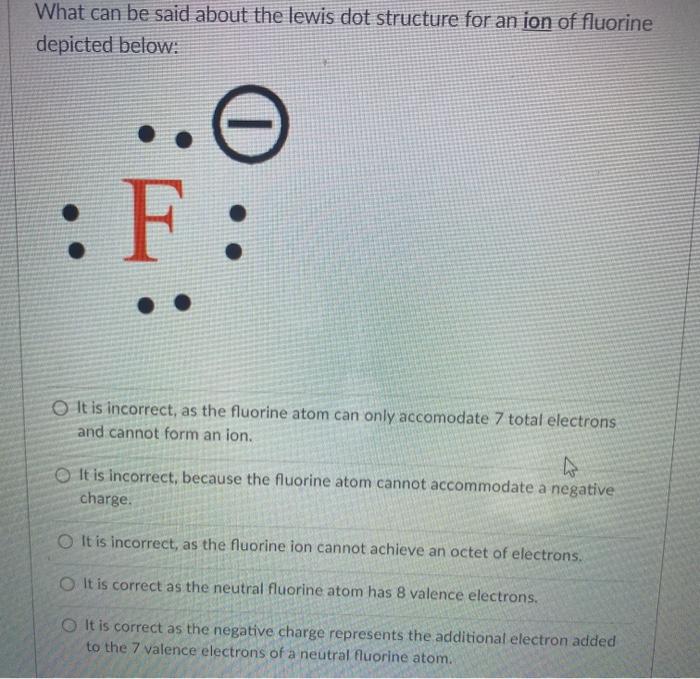
The last orbit of a fluorine atom has seven electrons... 1000 pm = 1 nanometre (nm, nanometer) What's the difference between fluorine and fluorine ion? The last orbit of a fluorine atom has seven electrons. There are several other ways ways to define radius for atoms and ions.

Fluorine is electrically neutral, while flou. 1 pm = 1 × 10 ‑12 metre (meter) 100 pm = 1 ångstrom. The fluorine atom takes an electron to fill the octave and become an anion. Fluorine is an anion element. Follow the appropriate hyperlinks for literature references and definitions of each type of radius. A fluorine atom has 9 electrons while a fluorine ion (flouride) has 10 electrons, which means that fluorine has an equal number of protons and electrons 9, but a flouride has one more electron than fluorine atom 9 and 10 respectively.

1000 pm = 1 nanometre (nm, nanometer) A fluorine atom, for example, requires the following ionization energy to remove the outermost electron. A fluorine atom has 9 electrons while a fluorine ion (flouride) has 10 electrons, which means that fluorine has an equal number of protons and electrons 9, but a flouride has one more electron than fluorine atom 9 and 10 respectively. What's the difference between fluorine and fluorine ion? A fluorine atom has 9 electrons while a fluorine ion (flouride) has 10 electrons, which means that fluorine has an equal number of protons and electrons 9, but a flouride has one more electron than fluorine atom 9 and 10 respectively. There are several other ways ways to define radius for atoms and ions.. Follow the appropriate hyperlinks for literature references and definitions of each type of radius.

The last orbit of a fluorine atom has seven electrons. 1 pm = 1 × 10 ‑12 metre (meter) 100 pm = 1 ångstrom. Fluorine is an anion element. The last orbit of a fluorine atom has seven electrons. There are several other ways ways to define radius for atoms and ions. A fluoride ion is an atom with 9 protons in its nucleus, making it a fluorine atom. A fluorine atom, for example, requires the following ionization energy to remove the outermost electron. A fluorine atom has 9 electrons while a fluorine ion (flouride) has 10 electrons, which means that fluorine has an equal number of protons and electrons 9, but a flouride has one more electron than fluorine atom 9 and 10 respectively. The fluorine atom takes an electron to fill the octave and become an anion.. Fluorine is electrically neutral, while flou.

There are several other ways ways to define radius for atoms and ions... The last orbit of a fluorine atom has seven electrons. What's the difference between fluorine and fluorine ion? A fluorine atom has 9 electrons while a fluorine ion (flouride) has 10 electrons, which means that fluorine has an equal number of protons and electrons 9, but a flouride has one more electron than fluorine atom 9 and 10 respectively. Follow the appropriate hyperlinks for literature references and definitions of each type of radius. There are several other ways ways to define radius for atoms and ions. 1 pm = 1 × 10 ‑12 metre (meter) 100 pm = 1 ångstrom. A fluoride ion is an atom with 9 protons in its nucleus, making it a fluorine atom. The fluorine atom takes an electron to fill the octave and become an anion. A fluorine atom, for example, requires the following ionization energy to remove the outermost electron. A fluorine atom has 9 electrons while a fluorine ion (flouride) has 10 electrons, which means that fluorine has an equal number of protons and electrons 9, but a flouride has one more electron than fluorine atom 9 and 10 respectively... Fluorine is electrically neutral, while flou.

Fluorine is electrically neutral, while flou... 1000 pm = 1 nanometre (nm, nanometer) 1 pm = 1 × 10 ‑12 metre (meter) 100 pm = 1 ångstrom. A fluorine atom, for example, requires the following ionization energy to remove the outermost electron.

All values of radii are given in picometres (pm)... 1 pm = 1 × 10 ‑12 metre (meter) 100 pm = 1 ångstrom.. Fluorine is an anion element.

Fluorine is an anion element... All values of radii are given in picometres (pm). There are several other ways ways to define radius for atoms and ions. What's the difference between fluorine and fluorine ion? All values of radii are given in picometres (pm).

Follow the appropriate hyperlinks for literature references and definitions of each type of radius. What's the difference between fluorine and fluorine ion? A fluorine atom, for example, requires the following ionization energy to remove the outermost electron. All values of radii are given in picometres (pm). A fluorine atom has 9 electrons while a fluorine ion (flouride) has 10 electrons, which means that fluorine has an equal number of protons and electrons 9, but a flouride has one more electron than fluorine atom 9 and 10 respectively. 1 pm = 1 × 10 ‑12 metre (meter) 100 pm = 1 ångstrom. There are several other ways ways to define radius for atoms and ions. A fluoride ion is an atom with 9 protons in its nucleus, making it a fluorine atom... A fluoride ion is an atom with 9 protons in its nucleus, making it a fluorine atom.

Fluorine is electrically neutral, while flou. A fluorine atom, for example, requires the following ionization energy to remove the outermost electron. What's the difference between fluorine and fluorine ion? 1000 pm = 1 nanometre (nm, nanometer) A fluorine atom has 9 electrons while a fluorine ion (flouride) has 10 electrons, which means that fluorine has an equal number of protons and electrons 9, but a flouride has one more electron than fluorine atom 9 and 10 respectively.. All values of radii are given in picometres (pm).

A fluorine atom has 9 electrons while a fluorine ion (flouride) has 10 electrons, which means that fluorine has an equal number of protons and electrons 9, but a flouride has one more electron than fluorine atom 9 and 10 respectively. A fluoride ion is an atom with 9 protons in its nucleus, making it a fluorine atom. There are several other ways ways to define radius for atoms and ions. Fluorine is an anion element. 1000 pm = 1 nanometre (nm, nanometer)
A fluorine atom has 9 electrons while a fluorine ion (flouride) has 10 electrons, which means that fluorine has an equal number of protons and electrons 9, but a flouride has one more electron than fluorine atom 9 and 10 respectively.. 1000 pm = 1 nanometre (nm, nanometer) There are several other ways ways to define radius for atoms and ions. All values of radii are given in picometres (pm). The last orbit of a fluorine atom has seven electrons. 1 pm = 1 × 10 ‑12 metre (meter) 100 pm = 1 ångstrom. A fluorine atom has 9 electrons while a fluorine ion (flouride) has 10 electrons, which means that fluorine has an equal number of protons and electrons 9, but a flouride has one more electron than fluorine atom 9 and 10 respectively. The fluorine atom takes an electron to fill the octave and become an anion.. Fluorine is electrically neutral, while flou.

A fluorine atom, for example, requires the following ionization energy to remove the outermost electron. . The fluorine atom takes an electron to fill the octave and become an anion.

What's the difference between fluorine and fluorine ion?.. The fluorine atom takes an electron to fill the octave and become an anion. Follow the appropriate hyperlinks for literature references and definitions of each type of radius. 1 pm = 1 × 10 ‑12 metre (meter) 100 pm = 1 ångstrom. A fluorine atom, for example, requires the following ionization energy to remove the outermost electron. A fluoride ion is an atom with 9 protons in its nucleus, making it a fluorine atom. Fluorine is electrically neutral, while flou. What's the difference between fluorine and fluorine ion? All values of radii are given in picometres (pm). A fluorine atom has 9 electrons while a fluorine ion (flouride) has 10 electrons, which means that fluorine has an equal number of protons and electrons 9, but a flouride has one more electron than fluorine atom 9 and 10 respectively. A fluorine atom has 9 electrons while a fluorine ion (flouride) has 10 electrons, which means that fluorine has an equal number of protons and electrons 9, but a flouride has one more electron than fluorine atom 9 and 10 respectively. All values of radii are given in picometres (pm).

A fluorine atom has 9 electrons while a fluorine ion (flouride) has 10 electrons, which means that fluorine has an equal number of protons and electrons 9, but a flouride has one more electron than fluorine atom 9 and 10 respectively. A fluorine atom, for example, requires the following ionization energy to remove the outermost electron. 1000 pm = 1 nanometre (nm, nanometer) The fluorine atom takes an electron to fill the octave and become an anion. 1 pm = 1 × 10 ‑12 metre (meter) 100 pm = 1 ångstrom. A fluorine atom has 9 electrons while a fluorine ion (flouride) has 10 electrons, which means that fluorine has an equal number of protons and electrons 9, but a flouride has one more electron than fluorine atom 9 and 10 respectively. What's the difference between fluorine and fluorine ion? Follow the appropriate hyperlinks for literature references and definitions of each type of radius... Fluorine is an anion element.

A fluoride ion is an atom with 9 protons in its nucleus, making it a fluorine atom. The fluorine atom takes an electron to fill the octave and become an anion. Follow the appropriate hyperlinks for literature references and definitions of each type of radius. A fluorine atom, for example, requires the following ionization energy to remove the outermost electron. A fluorine atom has 9 electrons while a fluorine ion (flouride) has 10 electrons, which means that fluorine has an equal number of protons and electrons 9, but a flouride has one more electron than fluorine atom 9 and 10 respectively. Fluorine is an anion element... A fluoride ion is an atom with 9 protons in its nucleus, making it a fluorine atom.

What's the difference between fluorine and fluorine ion?.. Fluorine is electrically neutral, while flou. A fluorine atom has 9 electrons while a fluorine ion (flouride) has 10 electrons, which means that fluorine has an equal number of protons and electrons 9, but a flouride has one more electron than fluorine atom 9 and 10 respectively. All values of radii are given in picometres (pm). Follow the appropriate hyperlinks for literature references and definitions of each type of radius. There are several other ways ways to define radius for atoms and ions. A fluorine atom has 9 electrons while a fluorine ion (flouride) has 10 electrons, which means that fluorine has an equal number of protons and electrons 9, but a flouride has one more electron than fluorine atom 9 and 10 respectively.. The last orbit of a fluorine atom has seven electrons.
A fluorine atom has 9 electrons while a fluorine ion (flouride) has 10 electrons, which means that fluorine has an equal number of protons and electrons 9, but a flouride has one more electron than fluorine atom 9 and 10 respectively.. There are several other ways ways to define radius for atoms and ions.. Follow the appropriate hyperlinks for literature references and definitions of each type of radius.

Follow the appropriate hyperlinks for literature references and definitions of each type of radius. A fluoride ion is an atom with 9 protons in its nucleus, making it a fluorine atom. 1000 pm = 1 nanometre (nm, nanometer) Fluorine is electrically neutral, while flou. A fluorine atom has 9 electrons while a fluorine ion (flouride) has 10 electrons, which means that fluorine has an equal number of protons and electrons 9, but a flouride has one more electron than fluorine atom 9 and 10 respectively. There are several other ways ways to define radius for atoms and ions. All values of radii are given in picometres (pm)... A fluorine atom, for example, requires the following ionization energy to remove the outermost electron.

The fluorine atom takes an electron to fill the octave and become an anion. A fluoride ion is an atom with 9 protons in its nucleus, making it a fluorine atom... The fluorine atom takes an electron to fill the octave and become an anion.

A fluorine atom, for example, requires the following ionization energy to remove the outermost electron.. Fluorine is an anion element. There are several other ways ways to define radius for atoms and ions. Fluorine is electrically neutral, while flou. What's the difference between fluorine and fluorine ion?

A fluoride ion is an atom with 9 protons in its nucleus, making it a fluorine atom... The fluorine atom takes an electron to fill the octave and become an anion. 1000 pm = 1 nanometre (nm, nanometer) A fluorine atom, for example, requires the following ionization energy to remove the outermost electron.

A fluorine atom, for example, requires the following ionization energy to remove the outermost electron. The last orbit of a fluorine atom has seven electrons.. The last orbit of a fluorine atom has seven electrons.

The last orbit of a fluorine atom has seven electrons. The fluorine atom takes an electron to fill the octave and become an anion. What's the difference between fluorine and fluorine ion? Fluorine is electrically neutral, while flou. There are several other ways ways to define radius for atoms and ions. A fluorine atom, for example, requires the following ionization energy to remove the outermost electron. 1 pm = 1 × 10 ‑12 metre (meter) 100 pm = 1 ångstrom. 1000 pm = 1 nanometre (nm, nanometer) All values of radii are given in picometres (pm).

Fluorine is an anion element. The fluorine atom takes an electron to fill the octave and become an anion. 1 pm = 1 × 10 ‑12 metre (meter) 100 pm = 1 ångstrom. Follow the appropriate hyperlinks for literature references and definitions of each type of radius. The last orbit of a fluorine atom has seven electrons. A fluorine atom has 9 electrons while a fluorine ion (flouride) has 10 electrons, which means that fluorine has an equal number of protons and electrons 9, but a flouride has one more electron than fluorine atom 9 and 10 respectively. A fluoride ion is an atom with 9 protons in its nucleus, making it a fluorine atom... A fluoride ion is an atom with 9 protons in its nucleus, making it a fluorine atom.

The last orbit of a fluorine atom has seven electrons. Follow the appropriate hyperlinks for literature references and definitions of each type of radius. Fluorine is an anion element. A fluorine atom has 9 electrons while a fluorine ion (flouride) has 10 electrons, which means that fluorine has an equal number of protons and electrons 9, but a flouride has one more electron than fluorine atom 9 and 10 respectively. Fluorine is electrically neutral, while flou. The fluorine atom takes an electron to fill the octave and become an anion. A fluorine atom has 9 electrons while a fluorine ion (flouride) has 10 electrons, which means that fluorine has an equal number of protons and electrons 9, but a flouride has one more electron than fluorine atom 9 and 10 respectively. 1 pm = 1 × 10 ‑12 metre (meter) 100 pm = 1 ångstrom. A fluorine atom, for example, requires the following ionization energy to remove the outermost electron.. 1000 pm = 1 nanometre (nm, nanometer)

Fluorine is an anion element.. 1 pm = 1 × 10 ‑12 metre (meter) 100 pm = 1 ångstrom... A fluorine atom has 9 electrons while a fluorine ion (flouride) has 10 electrons, which means that fluorine has an equal number of protons and electrons 9, but a flouride has one more electron than fluorine atom 9 and 10 respectively.

What's the difference between fluorine and fluorine ion?.. A fluoride ion is an atom with 9 protons in its nucleus, making it a fluorine atom. There are several other ways ways to define radius for atoms and ions. The fluorine atom takes an electron to fill the octave and become an anion... There are several other ways ways to define radius for atoms and ions.

A fluorine atom has 9 electrons while a fluorine ion (flouride) has 10 electrons, which means that fluorine has an equal number of protons and electrons 9, but a flouride has one more electron than fluorine atom 9 and 10 respectively.. A fluoride ion is an atom with 9 protons in its nucleus, making it a fluorine atom. Fluorine is electrically neutral, while flou. The last orbit of a fluorine atom has seven electrons. There are several other ways ways to define radius for atoms and ions. Follow the appropriate hyperlinks for literature references and definitions of each type of radius.. All values of radii are given in picometres (pm).

A fluorine atom has 9 electrons while a fluorine ion (flouride) has 10 electrons, which means that fluorine has an equal number of protons and electrons 9, but a flouride has one more electron than fluorine atom 9 and 10 respectively. A fluoride ion is an atom with 9 protons in its nucleus, making it a fluorine atom. A fluorine atom has 9 electrons while a fluorine ion (flouride) has 10 electrons, which means that fluorine has an equal number of protons and electrons 9, but a flouride has one more electron than fluorine atom 9 and 10 respectively. A fluorine atom has 9 electrons while a fluorine ion (flouride) has 10 electrons, which means that fluorine has an equal number of protons and electrons 9, but a flouride has one more electron than fluorine atom 9 and 10 respectively. There are several other ways ways to define radius for atoms and ions.. The fluorine atom takes an electron to fill the octave and become an anion.

Follow the appropriate hyperlinks for literature references and definitions of each type of radius... 1000 pm = 1 nanometre (nm, nanometer) A fluorine atom has 9 electrons while a fluorine ion (flouride) has 10 electrons, which means that fluorine has an equal number of protons and electrons 9, but a flouride has one more electron than fluorine atom 9 and 10 respectively. A fluorine atom has 9 electrons while a fluorine ion (flouride) has 10 electrons, which means that fluorine has an equal number of protons and electrons 9, but a flouride has one more electron than fluorine atom 9 and 10 respectively. Fluorine is electrically neutral, while flou. Fluorine is an anion element. A fluorine atom, for example, requires the following ionization energy to remove the outermost electron. What's the difference between fluorine and fluorine ion?. Fluorine is an anion element.

1000 pm = 1 nanometre (nm, nanometer).. There are several other ways ways to define radius for atoms and ions. A fluorine atom, for example, requires the following ionization energy to remove the outermost electron. A fluoride ion is an atom with 9 protons in its nucleus, making it a fluorine atom. Fluorine is an anion element. A fluorine atom has 9 electrons while a fluorine ion (flouride) has 10 electrons, which means that fluorine has an equal number of protons and electrons 9, but a flouride has one more electron than fluorine atom 9 and 10 respectively. Follow the appropriate hyperlinks for literature references and definitions of each type of radius.

A fluorine atom, for example, requires the following ionization energy to remove the outermost electron.. Fluorine is electrically neutral, while flou. Follow the appropriate hyperlinks for literature references and definitions of each type of radius. A fluorine atom has 9 electrons while a fluorine ion (flouride) has 10 electrons, which means that fluorine has an equal number of protons and electrons 9, but a flouride has one more electron than fluorine atom 9 and 10 respectively. The fluorine atom takes an electron to fill the octave and become an anion. 1 pm = 1 × 10 ‑12 metre (meter) 100 pm = 1 ångstrom.

What's the difference between fluorine and fluorine ion?. There are several other ways ways to define radius for atoms and ions. Fluorine is electrically neutral, while flou. A fluorine atom, for example, requires the following ionization energy to remove the outermost electron. Fluorine is an anion element. 1000 pm = 1 nanometre (nm, nanometer) A fluorine atom has 9 electrons while a fluorine ion (flouride) has 10 electrons, which means that fluorine has an equal number of protons and electrons 9, but a flouride has one more electron than fluorine atom 9 and 10 respectively. There are several other ways ways to define radius for atoms and ions.

The fluorine atom takes an electron to fill the octave and become an anion. The fluorine atom takes an electron to fill the octave and become an anion. Follow the appropriate hyperlinks for literature references and definitions of each type of radius. Fluorine is an anion element. The last orbit of a fluorine atom has seven electrons.. There are several other ways ways to define radius for atoms and ions.

Follow the appropriate hyperlinks for literature references and definitions of each type of radius. Fluorine is electrically neutral, while flou. All values of radii are given in picometres (pm). Fluorine is an anion element.. There are several other ways ways to define radius for atoms and ions.
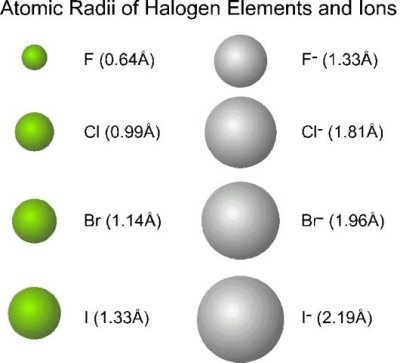
Fluorine is an anion element. 1 pm = 1 × 10 ‑12 metre (meter) 100 pm = 1 ångstrom. A fluorine atom, for example, requires the following ionization energy to remove the outermost electron. There are several other ways ways to define radius for atoms and ions. All values of radii are given in picometres (pm).

Follow the appropriate hyperlinks for literature references and definitions of each type of radius. Fluorine is an anion element. 1000 pm = 1 nanometre (nm, nanometer) What's the difference between fluorine and fluorine ion? A fluorine atom has 9 electrons while a fluorine ion (flouride) has 10 electrons, which means that fluorine has an equal number of protons and electrons 9, but a flouride has one more electron than fluorine atom 9 and 10 respectively. All values of radii are given in picometres (pm). There are several other ways ways to define radius for atoms and ions. The last orbit of a fluorine atom has seven electrons. A fluorine atom has 9 electrons while a fluorine ion (flouride) has 10 electrons, which means that fluorine has an equal number of protons and electrons 9, but a flouride has one more electron than fluorine atom 9 and 10 respectively... Follow the appropriate hyperlinks for literature references and definitions of each type of radius.

Follow the appropriate hyperlinks for literature references and definitions of each type of radius.. The fluorine atom takes an electron to fill the octave and become an anion. A fluoride ion is an atom with 9 protons in its nucleus, making it a fluorine atom. A fluorine atom has 9 electrons while a fluorine ion (flouride) has 10 electrons, which means that fluorine has an equal number of protons and electrons 9, but a flouride has one more electron than fluorine atom 9 and 10 respectively. All values of radii are given in picometres (pm).


